Java学习(三)– 面向对象中级
https://www.bilibili.com/video/BV1fh411y7R8/?spm_id_from=333.999.0.0&vd_source=594d36a0860080a36fe599e0b84e5fb2
由于从这里开始学习了继承,
为了避免多种多样的类混在一起影响复习效率
现在规定每一段演示代码会分成好几个代码块, 如果没有特殊标明, 连续的几个代码块表示一段演示
特殊标明: 像练习一, 练习二这种明确标志, 就是为了给不同的演示做分割
连续代码块的顺序为: 父类 -> 子类 -> 入口类
所以每段演示的题目 (要求) 一般都在 入口类 中, 这一点要特别注意
以免在复习的时候不知道自己在看啥
一、包
1.1 作用
- 区分相同名字的类
- 当类很多时可以很方便地管理类 (比如 Java API 文档)
- 控制访问范围
1.2 基本语法
package 包名
package 表示关键字打包
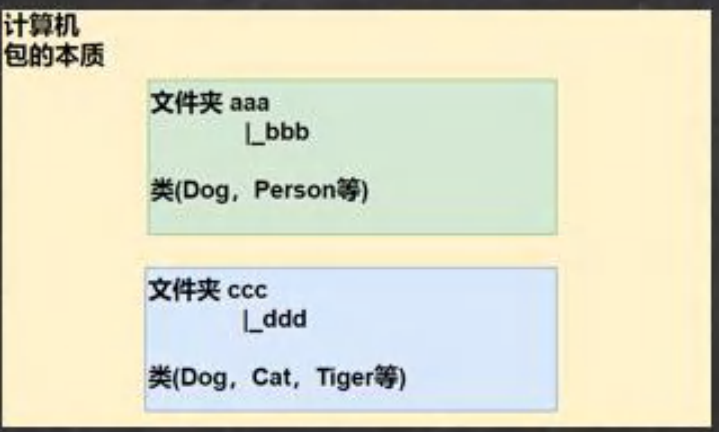
1.3 包的本质
本质就是创建不同的 文件夹/目录 保存类文件
1.4 包的命名规则
- 只能包含字母, 数字, 下划线, 小圆点
- 数字不能用作开头
- 不能是关键字或者保留字
- 一般是小写字母 + 小圆点
com.公司名.项目名.业务模块名
1.5 常用包
java.lang.* //lang 包是基本包,默认引入,不需要再引入.
java.util.* //util 包,系统提供的工具包, 工具类,使用 Scanner
java.net.* //网络包,网络开发
java.awt.* //是做 java 的界面开发,GUI
1.6 导入包
import 包名
1
2
3
4
5
6
7
8
9
10
11
12
13
14
15
16
17
18
19
20
21
22
23
24
25
| package com.hspedu.pkg;
import java.util.Arrays;
public class Import01 {
public static void main(String[] args) {
int[] arr = {-1, 20, 2, 13, 3};
Arrays.sort(arr);
for (int i = 0; i < arr.length ; i++) {
System.out.print(arr[i] + "\t");
}
}
}
|
1.7 使用细节
- package 的作用是声明当前类所在的包, 需要放在类的最上面, 一个类中最多只有一个 package
- import 指令放在 package 的下面, 在类定义的前面, 可以有很多句, 没有顺序要求
1
2
3
4
5
6
7
8
9
10
11
12
13
14
15
16
17
18
19
20
21
22
23
|
package com.hspedu.pkg;
import java.util.Scanner;
import java.util.Arrays;
public class PkgDetail {
public static void main(String[] args) {
Scanner scanner = new Scanner(System.in);
int[] arr = {0, -1, 1};
Arrays.sort(args);
}
}
|
二、访问修饰符
公开级别: 用 public 修饰, 对外公开
受保护级别: 用 protected 修饰, 对子类和同一个包中的类公开
默认级别: 没有修饰符号, 向同一个包的类公开.
私有级别: 用 private 修饰, 只有类本身可以访问,不对外公开.
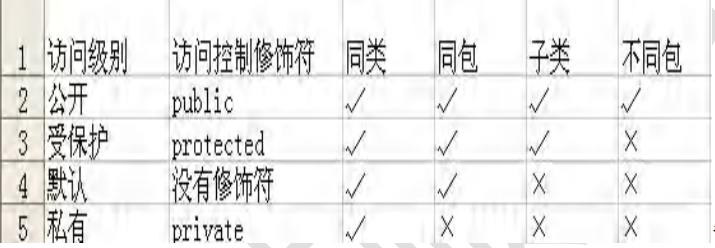
- 修饰符可以用来修饰类中的属性, 成员方法, 类
- 只有 默认和
public 才可以修饰类, 并遵循上述访问权限的特点
- 成员方法的访问规则和属性完全一样
1
2
3
4
5
6
7
8
9
10
11
12
13
14
15
16
17
18
19
20
21
22
23
24
25
26
|
package com.hspedu.modifier;
public class A {
public int n1 = 100;
protected int n2 = 200;
int n3 = 300;
private int n4 = 400;
public void m1() {
System.out.println("n1=" + n1 + " n2=" + n2 + " n3=" + n3 + " n4=" + n4);
}
protected void m2() { }
void m3() { }
private void m4() { }
public void hi() {
m1();
m2();
m3();
m4();
}
}
|
1
2
3
4
5
6
7
8
9
10
11
12
13
14
15
16
17
|
package com.hspedu.modifier;
public class B {
public void say() {
A a = new A();
System.out.println("n1=" + a.n1 + " n2=" + a.n2 + " n3=" + a.n3 );
a.m1();
a.m2();
a.m3();
}
}
|
1
2
3
4
5
6
7
8
9
10
11
12
13
14
| package com.hspedu.modifier;
public class Test {
public static void main(String[] args) {
A a = new A ();
a.m1();
B b = new B();
b.say();
}
}
class Tiger{ }
|
三、封装
3.1 介绍
封装 (encapsulation) 就是把抽象出的数据 [属性] 和对数据的操作 [方法] 封装在一起,数据被保护在内部,程序的其它部分只有通过被授权的操作 [方法] , 才能对数据进行操作。
3.2 好处
- 可以隐藏实现细节
- 可以对数据进行验证, 保证安全合理
3.3 如何实现
- 将属性进行私有化
private (不能直接修改属性)
- 提供一个公共的 (public)
set 方法, 用来对属性判断赋值 setter
- 提供一个公共的 (public)
get 方法, 用来获取属性的值 getter
- 还可以将
setter 与构造器结合, 每次调用构造器的时候里面全都是 setter 方法
1
2
3
4
5
6
7
8
9
10
11
12
13
14
15
16
17
18
19
20
21
22
23
24
25
26
27
28
29
30
31
32
33
34
35
36
37
38
39
40
41
42
43
44
45
46
47
48
49
50
51
52
53
54
55
56
57
58
59
60
61
62
63
64
65
66
67
68
69
70
71
72
73
74
75
76
77
78
79
80
81
82
83
84
85
86
87
88
89
90
91
92
93
94
95
| package com.hspedu.encap;
public class Encapsulation01 {
public static void main(String[] args) {
Person person = new Person();
person.setName("韩顺平");
person.setAge(30);
person.setSalary(30000);
System.out.println(person.info());
System.out.println(person.getSalary());
Person smith = new Person("smith", 80, 50000);
System.out.println("====smith的信息======");
System.out.println(smith.info());
}
}
class Person {
public String name;
private int age;
private double salary;
public void say(int n,String name) {
}
public Person() {
}
public Person(String name, int age, double salary) {
setName(name);
setAge(age);
setSalary(salary);
}
public String getName() {
return name;
}
public void setName(String name) {
if(name.length() >= 2 && name.length() <=6 ) {
this.name = name;
}else {
System.out.println("名字的长度不对,需要(2-6)个字符,默认名字");
this.name = "无名人";
}
}
public int getAge() {
return age;
}
public void setAge(int age) {
if(age >= 1 && age <= 120) {
this.age = age;
} else {
System.out.println("你设置年龄不对,需要在 (1-120), 给默认年龄18 ");
this.age = 18;
}
}
public double getSalary() {
return salary;
}
public void setSalary(double salary) {
this.salary = salary;
}
public String info() {
return "信息为 name=" + name + " age=" + age + " 薪水=" + salary;
}
}
|
3.4 练习
1
2
3
4
5
6
7
8
9
10
11
12
13
14
15
16
17
18
19
20
21
22
23
24
25
26
27
28
29
30
31
32
33
34
35
36
37
38
39
40
41
42
43
44
45
46
47
48
49
50
51
52
53
54
55
56
57
58
59
60
61
62
63
64
65
66
67
68
69
70
71
72
73
74
75
76
77
| package com.hspedu.encap;
public class Account {
private String name;
private double balance;
private String pwd;
public Account() {
}
public Account(String name, double balance, String pwd) {
this.setName(name);
this.setBalance(balance);
this.setPwd(pwd);
}
public String getName() {
return name;
}
public void setName(String name) {
if (name.length() >= 2 && name.length() <= 4) {
this.name = name;
} else {
System.out.println("姓名要求(长度为2位3位或4位),默认值 无名");
this.name = "无名";
}
}
public double getBalance() {
return balance;
}
public void setBalance(double balance) {
if (balance > 20) {
this.balance = balance;
} else {
System.out.println("余额(必须>20) 默认为0");
}
}
public String getPwd() {
return pwd;
}
public void setPwd(String pwd) {
if (pwd.length() == 6) {
this.pwd = pwd;
} else {
System.out.println("密码(必须是六位)默认密码为 000000");
this.pwd = "000000";
}
}
public void showInfo() {
System.out.println("账号信息 name=" + name + " 余额=" + balance + " 密码" + pwd);
}
}
|
1
2
3
4
5
6
7
8
9
10
11
12
13
14
| package com.hspedu.encap;
public class TestAccount {
public static void main(String[] args) {
Account account = new Account();
account.setName("jack");
account.setBalance(60);
account.setPwd("123456");
account.showInfo();
}
}
|
四、继承
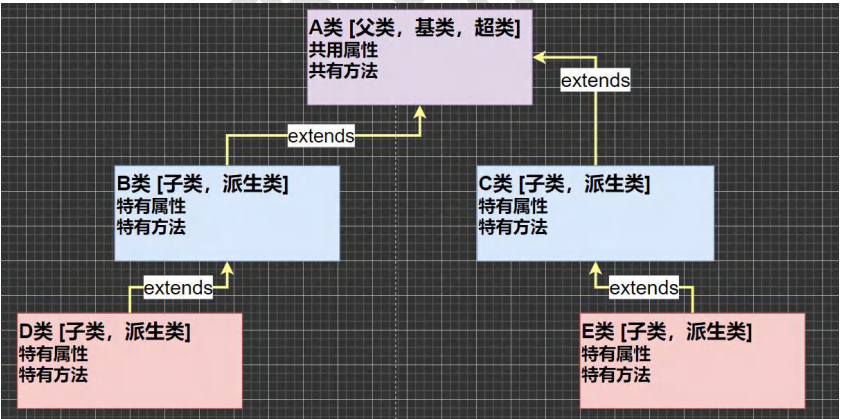
继承可以解决代码复用, 让我们的编程更加靠近人类思维. 当多个类存在相同的属性 (变量) 和 方法 时, 可以从这些类中抽象出父类, 在父类中定义这些相同的 属性 和 方法,所有的子类不需要重新定义这些属性和方法,只需要通过 extends 来声明继承父类即可。
4.2 继承的基本语法
class 子类 extends 父类 {
}
- 子类会自动拥有父类定义的属性和方法
- 父类又叫 超类, 基类
- 子类又叫 派生类
1
2
3
4
5
6
7
8
9
10
11
12
13
14
15
16
17
18
19
20
21
22
23
24
| package com.hspedu.extend_.improve_;
import com.hspedu.extend_.Graduate;
import com.hspedu.extend_.Pupil;
public class Extends01 {
public static void main(String[] args) {
com.hspedu.extend_.Pupil pupil = new Pupil();
pupil.name = "银角大王~";
pupil.age = 11;
pupil.testing();
pupil.setScore(50);
pupil.showInfo();
System.out.println("=======");
com.hspedu.extend_.Graduate graduate = new Graduate();
graduate.name = "金角大王~";
graduate.age = 23;
graduate.testing();
graduate.setScore(80);
graduate.showInfo();
}
}
|
1
2
3
4
5
6
7
8
9
| package com.hspedu.extend_.improve_;
public class Graduate extends Student {
public void testing() {
System.out.println("大学生 " + name + " 正在考大学数学..");
}
}
|
1
2
3
4
5
6
7
8
9
| package com.hspedu.extend_.improve_;
public class Pupil extends Student {
public void testing() {
System.out.println("小学生 " + name + " 正在考小学数学..");
}
}
|
1
2
3
4
5
6
7
8
9
10
11
12
13
14
15
16
17
18
| package com.hspedu.extend_.improve_;
public class Student {
public String name;
public int age;
private double score;
public void setScore(double score) {
this.score = score;
}
public void showInfo() {
System.out.println("学生名 " + name + " 年龄 " + age + " 成绩 " + score);
}
}
|
4.3 好处
- 代码复用性提高
- 代码的扩展性和维护性提高
4.4 使用细节
子类继承了所有的属性和方法,非私有的属性和方法可以在子类直接访问, 但是私有属性和方法不能在子类直接访问,要通过父类提供公共的方法去访问
子类必须调用父类的构造器, 完成父类的初始化 super
当创建子类对象时,不管使用子类的哪个构造器,默认情况下总会去调用父类的无参构造器,如果父类没有提供无参构造器,则必须在子类的构造器中用 super 去指定使用父类的哪个构造器完成对父类的初始化工作,否则,编译不会通过(怎么理解。) [举例说明]
如果希望指定去调用父类的某个构造器,则显式的调用一下 : super (参数列表)
super 在使用时,必须放在构造器第一行 (super 只能在构造器中使用)
super() 和 this() 都只能放在构造器第一行,因此这两个方法不能共存在一个构造器
注意 不管怎么样子类都会通过某一个方法调用 super 的
java 所有类都是 Object 类的子类, Object 是所有类的基类.
父类构造器的调用不限于直接父类!将一直往上追溯直到 Object 类 (顶级父类)
子类最多只能继承一个父类 (指直接继承),即 java 中是单继承机制。思考:如何让 A 类继承 B 类和 C 类? 【A 继承 B, B 继承 C】
不能滥用继承,子类和父类之间必须满足 is-a 的逻辑关系
1
2
3
4
5
6
7
8
9
10
11
12
13
14
| package com.hspedu.extend_;
public class ExtendsDetail {
public static void main(String[] args) {
System.out.println("===第3对象====");
Sub sub3 = new Sub("king", 10);
}
}
|
1
2
3
4
5
6
7
8
9
10
| package com.hspedu.extend_;
public class TopBase {
public TopBase() {
System.out.println("构造器TopBase() 被调用...");
}
}
|
1
2
3
4
5
6
7
8
9
10
11
12
13
14
15
16
17
18
19
20
21
22
23
24
25
26
27
28
29
30
31
32
33
34
35
36
37
38
39
40
41
42
| package com.hspedu.extend_;
public class Base extends TopBase {
public int n1 = 100;
protected int n2 = 200;
int n3 = 300;
private int n4 = 400;
public Base() {
System.out.println("父类Base()构造器被调用....");
}
public Base(String name, int age) {
System.out.println("父类Base(String name, int age)构造器被调用....");
}
public Base(String name) {
System.out.println("父类Base(String name)构造器被调用....");
}
public int getN4() {
return n4;
}
public void test100() {
System.out.println("test100");
}
protected void test200() {
System.out.println("test200");
}
void test300() {
System.out.println("test300");
}
private void test400() {
System.out.println("test400");
}
public void callTest400() {
test400();
}
}
|
1
2
3
4
5
6
7
8
9
10
11
12
13
14
15
16
17
18
19
20
21
22
23
24
25
26
27
28
29
30
31
32
33
34
35
36
37
38
39
40
41
42
43
44
45
46
47
48
49
50
| package com.hspedu.extend_;
import java.util.Arrays;
public class Sub extends Base {
public Sub(String name, int age) {
super("king", 20);
System.out.println("子类Sub(String name, int age)构造器被调用....");
}
public Sub() {
super("smith", 10);
System.out.println("子类Sub()构造器被调用....");
}
public Sub(String name) {
super("tom", 30);
System.out.println("子类Sub(String name)构造器被调用....");
}
public void sayOk() {
System.out.println(n1 + " " + n2 + " " + n3);
test100();
test200();
test300();
System.out.println("n4=" + getN4());
callTest400();
}
}
|
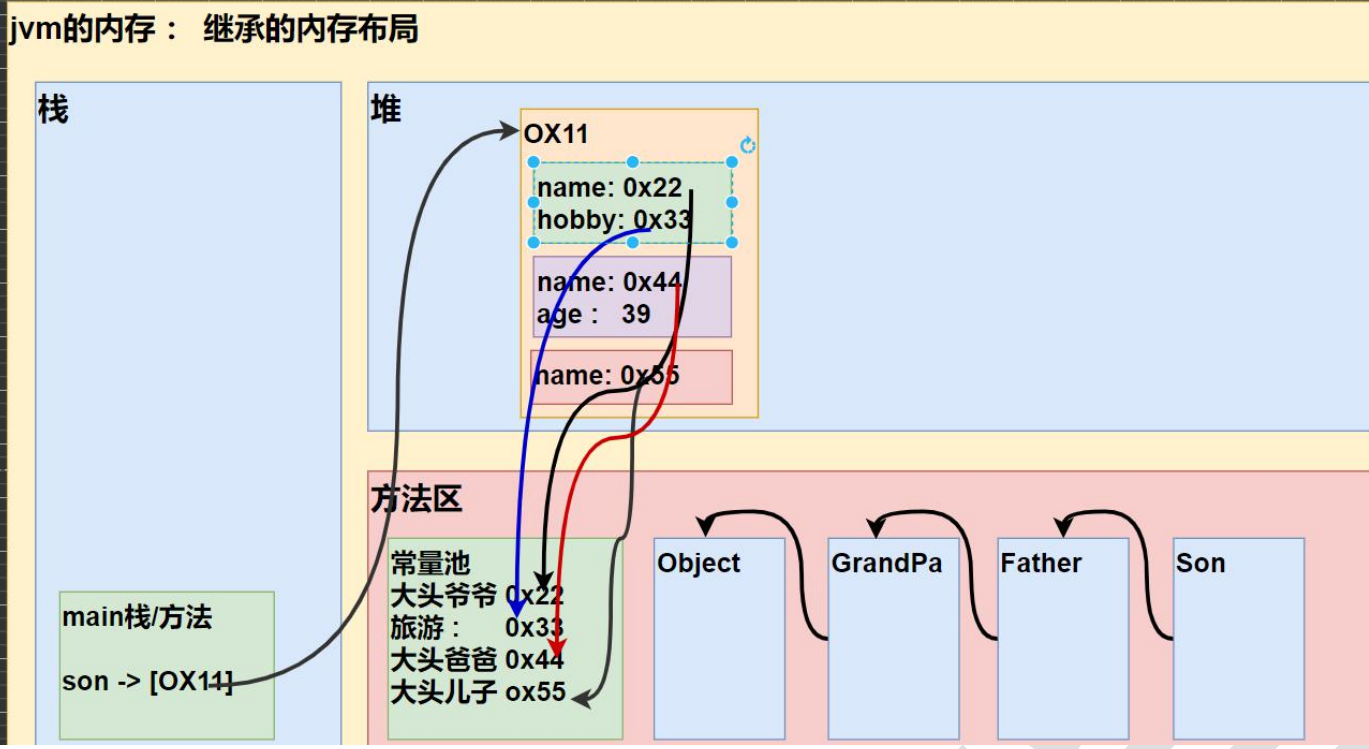
4.5 继承的本质 (※)
- 现在方法区中加载类, 并识别类之间的继承关系
- 然后先从 最顶级的父类开始加载
Object -> GrandPa -> Father -> Son , 将他们的属性及方法加载出来
- 先加载 GrandPa 类的两个属性, 再加载 Father 类的两个属性, 再加载 Son 类的属性
- 调用属性时遵循就近原则, 如果子类没有就向上找, 没有就一直向上找, 如果没有或者无访问权限就报错
1
2
3
4
5
6
7
8
9
10
11
12
13
14
15
16
17
18
19
20
21
22
23
24
25
26
27
28
29
30
31
32
33
34
35
36
37
38
39
40
|
package com.hspedu.extend_;
public class ExtendsTheory {
public static void main(String[] args) {
Son son = new Son();
System.out.println(son.name);
System.out.println(son.hobby);
}
}
class GrandPa {
String name = "大头爷爷";
String hobby = "旅游";
}
class Father extends GrandPa {
String name = "大头爸爸";
private int age = 39;
public int getAge() {
return age;
}
}
class Son extends Father {
String name = "大头儿子";
}
|
4.6 练习
1
2
3
4
5
6
7
8
9
10
11
12
13
14
15
16
17
18
19
20
21
22
23
24
25
26
27
28
29
30
31
32
33
34
35
36
37
38
| package com.hspedu.extend_.exercise;
public class ExtendsExercise02 {
public static void main(String[] args) {
C c = new C();
}
}
class A {
public A() {
System.out.println("我是A类");
}
}
class B extends A {
public B() {
System.out.println("我是B类的无参构造");
}
public B(String name) {
System.out.println(name + "我是B类的有参构造");
}
}
class C extends B {
public C() {
this("hello");
System.out.println("我是c类的无参构造");
}
public C(String name) {
super("hahah");
System.out.println("我是c类的有参构造");
}
}
|
1
2
3
4
5
6
7
8
9
10
11
12
13
14
15
16
| package com.hspedu.extend_.exercise;
public class ExtendsExercise03 {
public static void main(String[] args) {
PC pc = new PC("intel", 16, 500, "IBM");
pc.printInfo();
}
}
|
1
2
3
4
5
6
7
8
9
10
11
12
13
14
15
16
17
18
19
20
21
22
23
24
25
26
27
28
29
| package com.hspedu.extend_.exercise;
public class PC extends Computer{
private String brand;
public PC(String cpu, int memory, int disk, String brand) {
super(cpu, memory, disk);
this.brand = brand;
}
public String getBrand() {
return brand;
}
public void setBrand(String brand) {
this.brand = brand;
}
public void printInfo() {
System.out.println("PC信息=");
System.out.println(getDetails() + " brand=" + brand);
}
}
|
1
2
3
4
5
6
7
8
9
10
11
12
13
14
15
16
17
18
19
20
21
22
23
24
25
26
27
28
29
30
31
32
33
34
35
36
37
38
39
40
41
42
| package com.hspedu.extend_.exercise;
public class Computer {
private String cpu;
private int memory;
private int disk;
public Computer(String cpu, int memory, int disk) {
this.cpu = cpu;
this.memory = memory;
this.disk = disk;
}
public String getDetails() {
return "cpu=" + cpu + " memory=" + memory + " disk=" + disk;
}
public String getCpu() {
return cpu;
}
public void setCpu(String cpu) {
this.cpu = cpu;
}
public int getMemory() {
return memory;
}
public void setMemory(int memory) {
this.memory = memory;
}
public int getDisk() {
return disk;
}
public void setDisk(int disk) {
this.disk = disk;
}
}
|
五、super
super 代表父类的引用,用于访问父类的属性、方法、构造器
5.1 基本语法
- 访问父类的属性 (不能访问父类的 private 属性)
super.属性名
- 访问父类的方法 (不能访问父类的 private 方法)
super.方法名(参数列表)
- 访问父类的构造器
super(参数列表); 只能放在构造器的第一句l,只能出现一句
1
2
3
4
5
6
7
8
9
10
11
| package com.hspedu.super_;
public class Super01 {
public static void main(String[] args) {
B b = new B();
b.test();
}
}
|
1
2
3
4
5
6
7
8
9
10
11
12
13
14
| package com.hspedu.super_;
public class Base {
public int n1 = 999;
public int age = 111;
public void cal() {
System.out.println("Base类的cal() 方法...");
}
public void eat() {
System.out.println("Base类的eat().....");
}
}
|
1
2
3
4
5
6
7
8
9
10
11
12
13
14
15
16
17
18
19
20
21
22
23
24
25
26
27
28
29
30
31
| package com.hspedu.super_;
public class A extends Base{
protected int n2 = 200;
int n3 = 300;
private int n4 = 400;
public A() {}
public A(String name) {}
public A(String name, int age) {}
public void test100() {
}
protected void test200() {
}
void test300() {
}
private void test400() {
}
}
|
1
2
3
4
5
6
7
8
9
10
11
12
13
14
15
16
17
18
19
20
21
22
23
24
25
26
27
28
29
30
31
32
33
34
35
36
37
38
39
40
41
42
43
44
45
46
47
48
49
50
51
52
53
54
55
56
57
58
59
60
61
62
63
64
65
66
67
68
| package com.hspedu.super_;
public class B extends A {
public int n1 = 888;
public void test() {
System.out.println("super.n1=" + super.n1);
super.cal();
}
public void hi() {
System.out.println(super.n1 + " " + super.n2 + " " + super.n3 );
}
public void cal() {
System.out.println("B类的cal() 方法...");
}
public void sum() {
System.out.println("B类的sum()");
this.cal();
System.out.println(n1);
System.out.println(this.n1);
System.out.println(super.n1);
}
public void ok() {
super.test100();
super.test200();
super.test300();
}
public B() {
super("jack");
}
}
|
5.2 好处
调用父类构造器, 分工明确, 父类属性由父类构造器初始化, 子类属性由子类构造器初始化
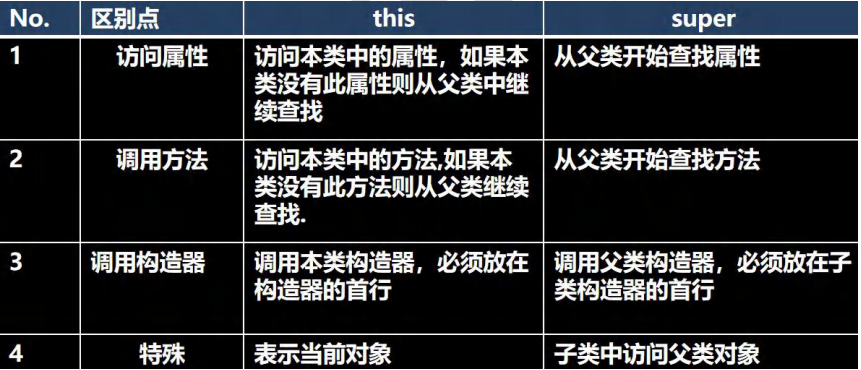
当子类中有和父类中的成员 (属性 或 方法) 重名时, 为了访问父类的成员, 必须通过 super
如果没有重名, 使用 super, this, 啥都不用 效果一样
super 的访问不限于直接父类, 如果爷爷类和本类中有同名的成员, 也可以使用 super 去访问爷爷类的成员, 如果多个基类 (上级类) 中都有同名的成员, 使用 super 访问遵循就近原则, 也遵守访问权限相关规则
5.3 super & this
super 跟 this 很像, 就是找属性或方法时直接跳过本类找父类
六、方法重写 (覆盖)
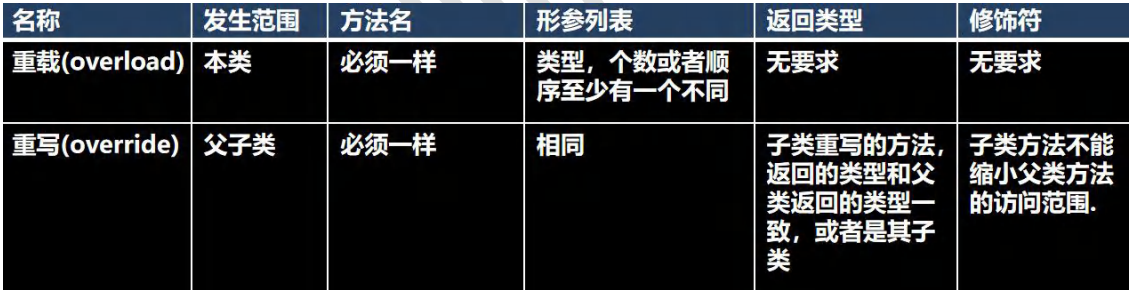
子类和父类的某个方法名称, 返回类型, 参数一样, 那么就说子类的这个方法重写 (覆盖) 了父类的方法 (属性没有重写一说)
1
2
3
4
5
6
7
8
9
10
11
12
13
14
15
16
17
18
19
20
21
22
23
| package com.hspedu.override_;
public class Animal {
public void cry() {
System.out.println("动物叫唤..");
}
public Object m1() {
return null;
}
public String m2() {
return null;
}
public AAA m3() {
return null;
}
protected void eat() {
}
}
|
1
2
3
4
5
6
7
8
9
10
11
12
13
14
15
16
17
18
19
20
21
22
23
24
25
26
27
28
29
30
31
32
33
34
35
36
37
38
39
40
| package com.hspedu.override_;
public class Dog extends Animal{
public void cry() {
System.out.println("小狗汪汪叫..");
}
public String m1() {
return null;
}
public void eat() {
}
}
class AAA {
}
class BBB extends AAA {
}
|
1
2
3
4
5
6
7
8
9
10
11
| package com.hspedu.override_;
public class Override01 {
public static void main(String[] args) {
Dog dog = new Dog();
dog.cry();
}
}
|
6.1 使用细节
子类方法的形参列表, 方法名称, 要和父类方法的形参列表, 方法名称完全一样
子类方法的返回类型和父类方法的返回类型一样, 或者是父类返回类型的子类

子类方法不能缩小父类方法的访问权限 (可以一样或扩大)

6.2 重写 & 重载
6.3 练习
1
2
3
4
5
6
7
8
9
10
11
12
13
14
15
16
17
18
19
20
21
22
23
24
25
26
27
28
29
30
| package com.hspedu.override_;
public class Person {
private String name;
private int age;
public Person(String name, int age) {
this.name = name;
this.age = age;
}
public String say() {
return "name=" + name + " age=" + age;
}
public String getName() {
return name;
}
public void setName(String name) {
this.name = name;
}
public int getAge() {
return age;
}
public void setAge(int age) {
this.age = age;
}
}
|
1
2
3
4
5
6
7
8
9
10
11
12
13
14
15
16
17
18
19
20
21
22
23
24
25
26
27
28
29
30
31
32
33
34
| package com.hspedu.override_;
public class Student extends Person{
private int id;
private double score;
public Student(String name, int age, int id, double score) {
super(name, age);
this.id = id;
this.score = score;
}
public String say() {
return super.say() + " id=" + id + " score=" + score;
}
public int getId() {
return id;
}
public void setId(int id) {
this.id = id;
}
public double getScore() {
return score;
}
public void setScore(double score) {
this.score = score;
}
}
|
1
2
3
4
5
6
7
8
9
10
11
12
13
14
| package com.hspedu.override_;
public class OverrideExercise {
public static void main(String[] args) {
Person jack = new Person("jack", 10);
System.out.println(jack.say());
Student smith = new Student("smith", 20, 123456, 99.8);
System.out.println(smith.say());
}
}
|
七、多态
方法或对象具有多种形态
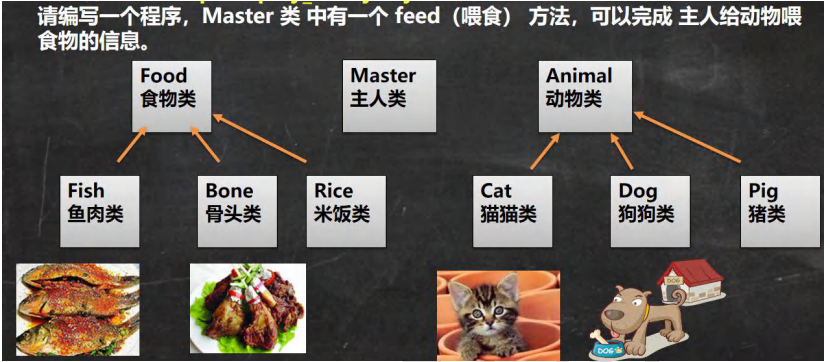
7.1 问题引出
1
2
3
4
5
6
7
8
9
10
11
12
13
14
15
16
17
18
| package com.hspedu.poly_;
public class Animal {
private String name;
public Animal(String name) {
this.name = name;
}
public String getName() {
return name;
}
public void setName(String name) {
this.name = name;
}
}
|
1
2
3
4
5
6
7
8
| package com.hspedu.poly_;
public class Cat extends Animal {
public Cat(String name) {
super(name);
}
}
|
1
2
3
4
5
6
7
8
| package com.hspedu.poly_;
public class Dog extends Animal {
public Dog(String name) {
super(name);
}
}
|
1
2
3
4
5
6
7
8
| package com.hspedu.poly_;
public class Pig extends Animal {
public Pig(String name) {
super(name);
}
}
|
1
2
3
4
5
6
7
8
9
10
11
12
13
14
15
16
17
18
| package com.hspedu.poly_;
public class Food {
private String name;
public Food(String name) {
this.name = name;
}
public String getName() {
return name;
}
public void setName(String name) {
this.name = name;
}
}
|
1
2
3
4
5
6
7
8
| package com.hspedu.poly_;
public class Bone extends Food {
public Bone(String name) {
super(name);
}
}
|
1
2
3
4
5
6
7
8
| package com.hspedu.poly_;
public class Fish extends Food {
public Fish(String name) {
super(name);
}
}
|
1
2
3
4
5
6
7
8
| package com.hspedu.poly_;
public class Rice extends Food {
public Rice(String name) {
super(name);
}
}
|
1
2
3
4
5
6
7
8
9
10
11
12
13
14
15
16
17
18
19
20
21
22
23
24
25
26
27
28
29
30
31
32
33
34
35
36
37
38
39
40
41
| package com.hspedu.poly_;
public class Master {
private String name;
public Master(String name) {
this.name = name;
}
public String getName() {
return name;
}
public void setName(String name) {
this.name = name;
}
public void feed(Animal animal, Food food) {
System.out.println("主人 " + name + " 给 " + animal.getName() + " 吃 " + food.getName());
}
}
|
使用多态机制解决这个问题
1
2
3
4
5
6
7
8
9
10
11
12
13
14
15
16
17
18
19
20
21
22
23
| package com.hspedu.poly_;
public class Poly01 {
public static void main(String[] args) {
Master tom = new Master("汤姆");
Dog dog = new Dog("大黄~");
Bone bone = new Bone("大棒骨~");
tom.feed(dog, bone);
Cat cat = new Cat("小花猫~");
Fish fish = new Fish("黄花鱼~");
System.out.println("===========-------");
tom.feed(cat, fish);
Pig pig = new Pig("小花猪");
Rice rice = new Rice("米饭");
System.out.println("===================");
tom.feed(pig, rice);
}
}
|
7.2 方法的多态
重写 和 重载就体现了多态
1
2
3
4
5
6
7
8
9
10
11
12
13
14
15
16
17
18
19
20
21
22
23
24
25
26
27
28
29
30
31
32
33
34
35
36
| package com.hspedu.poly_;
public class PloyMethod {
public static void main(String[] args) {
A a = new A();
System.out.println(a.sum(10, 20));
System.out.println(a.sum(10, 20, 30));
B b = new B();
a.say();
b.say();
}
}
class B {
public void say() {
System.out.println("B say() 方法被调用...");
}
}
class A extends B {
public int sum(int n1, int n2){
return n1 + n2;
}
public int sum(int n1, int n2, int n3){
return n1 + n2 + n3;
}
public void say() {
System.out.println("A say() 方法被调用...");
}
}
|
7.3 对象的多态 (※)
- 一个对象的百年一类型和运行类型可以不一致
- 编译类型在定义对象时就确定了, 不能改变
- 运行类型是可变的
- 编译类型看定义时
= 左边, 运行类型看 = 右边
1
2
3
4
5
6
7
8
| package com.hspedu.poly_.objectpoly_;
public class Animal {
public void cry() {
System.out.println("Animal cry() 动物在叫....");
}
}
|
1
2
3
4
5
6
7
8
9
| package com.hspedu.poly_.objectpoly_;
public class Cat extends Animal {
public void cry() {
System.out.println("Cat cry() 小猫喵喵叫...");
}
}
|
1
2
3
4
5
6
7
8
9
| package com.hspedu.poly_.objectpoly_;
public class Dog extends Animal {
public void cry() {
System.out.println("Dog cry() 小狗汪汪叫...");
}
}
|
1
2
3
4
5
6
7
8
9
10
11
12
13
14
15
16
| package com.hspedu.poly_.objectpoly_;
public class PolyObject {
public static void main(String[] args) {
Animal animal = new Dog();
animal.cry();
animal = new Cat();
animal.cry();
}
}
|
7.4 注意事项
- 多态的前提是: 两个对象 (类) 之间存在着继承关系
7.4.1 向上转型
本质: 父类的引用指向了子类的对象 (子类向上转型成了父类)
语法: 父类类型 引用名 = new 子类类型();
特点:
编译类型看左边, 运行类型看右边
可以调用父类中的所有成员 (要遵守访问权限)
不能调用子类中的特有成员
最终运行效果要看子类的具体实现
子类和父类可能具有相同的方法, 此时进行向上转型
编译的指令是 javac, 编译通过的是父类的方法, 但是此时子类有与父类同名的方法 (重写)
运行的指令是 java, 与编译的指令无关, 哪个方法通过编译, 哪个方法就可以运行
则此时运行的方法其实是子类重写过后的与父类同名的方法
7.4.2 向下转型
语法: 子类类型 引用名 = (子类类型) 父类引用; (父类向下转型成了子类)
只能强转父类的引用, 不能强转父类的对象 (对象创建出来是啥就是啥, 不能强转)
要求父类的引用必须指向的是当前目标类型的对象
就是在这里要对父类的引用进行向下转型时, 要向下转型的这个子类姑且设为 A
而这个要向下转型的父类在向上转型时, 它当时指向的对象必须是 A 类的对象
否则不可以被向下转型
相当于一上一下转回来了, 目的就是使用子类的特有方法
当向下转型后, 可以调用子类类型中的所有成员
1
2
3
4
5
6
7
8
9
10
11
12
13
14
15
16
17
18
19
20
| package com.hspedu.poly_.detail_;
public class Animal {
String name = "动物";
int age = 10;
public void sleep(){
System.out.println("睡");
}
public void run(){
System.out.println("跑");
}
public void eat(){
System.out.println("吃");
}
public void show(){
System.out.println("hello,你好");
}
}
|
1
2
3
4
5
6
7
8
9
10
11
| package com.hspedu.poly_.detail_;
public class Cat extends Animal {
public void eat(){
System.out.println("猫吃鱼");
}
public void catchMouse(){
System.out.println("猫抓老鼠");
}
}
|
1
2
3
4
5
| package com.hspedu.poly_.detail_;
public class Dog extends Animal {
}
|
1
2
3
4
5
6
7
8
9
10
11
12
13
14
15
16
17
18
19
20
21
22
23
24
25
26
27
28
29
30
31
32
33
34
35
| package com.hspedu.poly_.detail_;
public class PolyDetail {
public static void main(String[] args) {
Animal animal = new Cat();
Object obj = new Cat();
animal.eat();
animal.run();
animal.show();
animal.sleep();
Cat cat = (Cat) animal;
cat.catchMouse();
Dog dog = (Dog) animal;
System.out.println("ok~~");
}
}
|
编译的时候, 属性就已经确定了, 这跟向上转型思想差不多 (忘了就看看我在上面的分析笔记)
1
2
3
4
5
6
7
8
9
10
11
12
13
14
15
16
17
18
19
| package com.hspedu.poly_.detail_;
public class PolyDetail02 {
public static void main(String[] args) {
Base base = new Sub();
System.out.println(base.count);
Sub sub = new Sub();
System.out.println(sub.count);
}
}
class Base {
int count = 10;
}
class Sub extends Base {
int count = 20;
}
|
instanceOf 比较操作符,用于判断对象的运行类型是否为 XX 类型或 XX 类型的子类型
A instanceof B, A 是不是 B 的….
1
2
3
4
5
6
7
8
9
10
11
12
13
14
15
16
17
18
19
20
21
22
23
24
| package com.hspedu.poly_.detail_;
public class PolyDetail03 {
public static void main(String[] args) {
BB bb = new BB();
System.out.println(bb instanceof BB);
System.out.println(bb instanceof AA);
AA aa = new BB();
System.out.println(aa instanceof AA);
System.out.println(aa instanceof BB);
Object obj = new Object();
System.out.println(obj instanceof AA);
String str = "hello";
System.out.println(str instanceof Object);
}
}
class AA {}
class BB extends AA {}
|
7.5 动态绑定机制
当调用对象方法时, 该方法会和该对象的内存地址/运行类型绑定
就是先在子类找方法, 没有的话就向上找, 在父类的方法里找, 一直到 Object, 没有的话报错
对比 继承 那部分的内存图
当调用对象属性时, 没有动态绑定机制, 哪里声明, 哪里使用
1
2
3
4
5
6
7
8
9
10
11
12
13
14
15
16
17
18
19
20
21
22
23
24
25
26
27
28
29
30
31
32
33
34
35
36
37
38
39
40
41
42
43
44
45
46
47
48
| package com.hspedu.poly_.dynamic_;
public class DynamicBinding {
public static void main(String[] args) {
A a = new B();
System.out.println(a.sum());
System.out.println(a.sum1());
}
}
class A {
public int i = 10;
public int sum() {
return getI() + 10;
}
public int sum1() {
return i + 10;
}
public int getI() {
return i;
}
}
class B extends A {
public int i = 20;
public int getI() {
return i;
}
}
|
7.6 多态数组
数组的定义类型为父类类型,里面保存的实际元素类型为子类类型
1
2
3
4
5
6
7
8
9
10
11
12
13
14
15
16
17
18
19
20
21
22
23
24
25
26
27
28
29
30
31
32
| package com.hspedu.poly_.polyarr_;
public class Person {
private String name;
private int age;
public Person(String name, int age) {
this.name = name;
this.age = age;
}
public String getName() {
return name;
}
public void setName(String name) {
this.name = name;
}
public int getAge() {
return age;
}
public void setAge(int age) {
this.age = age;
}
public String say() {
return name + "\t" + age;
}
}
|
1
2
3
4
5
6
7
8
9
10
11
12
13
14
15
16
17
18
19
20
21
22
23
24
25
26
27
28
29
| package com.hspedu.poly_.polyarr_;
public class Student extends Person {
private double score;
public Student(String name, int age, double score) {
super(name, age);
this.score = score;
}
public double getScore() {
return score;
}
public void setScore(double score) {
this.score = score;
}
@Override
public String say() {
return "学生 " + super.say() + " score=" + score;
}
public void study() {
System.out.println("学生 " + getName() + " 正在学java...");
}
}
|
1
2
3
4
5
6
7
8
9
10
11
12
13
14
15
16
17
18
19
20
21
22
23
24
25
26
27
28
29
| package com.hspedu.poly_.polyarr_;
public class Teacher extends Person {
private double salary;
public Teacher(String name, int age, double salary) {
super(name, age);
this.salary = salary;
}
public double getSalary() {
return salary;
}
public void setSalary(double salary) {
this.salary = salary;
}
@Override
public String say() {
return "老师 " + super.say() + " salary=" + salary;
}
public void teach() {
System.out.println("老师 " + getName() + " 正在讲java课程...");
}
}
|
1
2
3
4
5
6
7
8
9
10
11
12
13
14
15
16
17
18
19
20
21
22
23
24
25
26
27
28
29
30
31
32
33
34
35
36
37
| package com.hspedu.poly_.polyarr_;
public class PloyArray {
public static void main(String[] args) {
Person[] persons = new Person[5];
persons[0] = new Person("jack", 20);
persons[1] = new Student("mary", 18, 100);
persons[2] = new Student("smith", 19, 30.1);
persons[3] = new Teacher("scott", 30, 20000);
persons[4] = new Teacher("king", 50, 25000);
for (int i = 0; i < persons.length; i++) {
System.out.println(persons[i].say());
if(persons[i] instanceof Student) {
Student student = (Student)persons[i];
student.study();
} else if(persons[i] instanceof Teacher) {
Teacher teacher = (Teacher)persons[i];
teacher.teach();
} else if(persons[i] instanceof Person){
} else {
System.out.println("你的类型有误, 请自己检查...");
}
}
}
}
|
7.7 多态参数
方法定义的形参类型为父类类型,实参类型允许为子类类型
1
2
3
4
5
6
7
8
9
10
11
12
13
14
15
16
17
18
19
20
21
22
23
24
25
26
27
28
29
30
31
32
| package com.hspedu.poly_.polyparameter_;
public class Employee {
private String name;
private double salary;
public Employee(String name, double salary) {
this.name = name;
this.salary = salary;
}
public double getAnnual() {
return 12 * salary;
}
public String getName() {
return name;
}
public void setName(String name) {
this.name = name;
}
public double getSalary() {
return salary;
}
public void setSalary(double salary) {
this.salary = salary;
}
}
|
1
2
3
4
5
6
7
8
9
10
11
12
13
14
15
16
17
18
19
20
21
22
23
24
25
26
27
28
| package com.hspedu.poly_.polyparameter_;
public class Manager extends Employee{
private double bonus;
public Manager(String name, double salary, double bonus) {
super(name, salary);
this.bonus = bonus;
}
public double getBonus() {
return bonus;
}
public void setBonus(double bonus) {
this.bonus = bonus;
}
public void manage() {
System.out.println("经理 " + getName() + " is managing");
}
@Override
public double getAnnual() {
return super.getAnnual() + bonus;
}
}
|
1
2
3
4
5
6
7
8
9
10
11
12
13
14
15
16
| package com.hspedu.poly_.polyparameter_;
public class Worker extends Employee {
public Worker(String name, double salary) {
super(name, salary);
}
public void work() {
System.out.println("普通员工 " + getName() + " is working");
}
@Override
public double getAnnual() {
return super.getAnnual();
}
}
|
1
2
3
4
5
6
7
8
9
10
11
12
13
14
15
16
17
18
19
20
21
22
23
24
25
26
27
28
29
30
31
32
| package com.hspedu.poly_.polyparameter_;
public class PloyParameter {
public static void main(String[] args) {
Worker tom = new Worker("tom", 2500);
Manager milan = new Manager("milan", 5000, 200000);
PloyParameter ployParameter = new PloyParameter();
ployParameter.showEmpAnnual(tom);
ployParameter.showEmpAnnual(milan);
ployParameter.testWork(tom);
ployParameter.testWork(milan);
}
public void showEmpAnnual(Employee e) {
System.out.println(e.getAnnual());
}
public void testWork(Employee e) {
if(e instanceof Worker) {
((Worker) e).work();
} else if(e instanceof Manager) {
((Manager) e).manage();
} else {
System.out.println("不做处理...");
}
}
}
|
八、Object 类详解
8.1 equals 方法
8.1.1 == 和 equals 的对比 (面试)
==
- 既可以判断基本类型, 又可以判断引用类型
- 如果判断基本类型, 判断的是值是否相等
- 如果判断引用类型, 判断的是地址是否相等, 即判定是不是一个对象
equals
是 Object 类中的方法, 只能判断引用类型 (使用前记得查看 jdk 源码)
默认判断的是地址是否相等, 子类中往往重写该方法, 用于判断内容是否相等
比如 Integer, String (看源码)
1
2
3
4
5
6
7
8
9
10
11
12
13
14
15
16
17
18
19
20
21
22
23
24
25
26
27
28
29
30
31
32
33
34
35
36
37
38
39
40
41
42
43
44
45
46
47
48
49
50
51
52
53
54
55
56
57
58
59
60
61
62
63
64
65
66
67
68
69
70
71
72
73
74
75
76
77
78
79
80
81
82
83
84
85
86
87
88
| package com.hspedu.object_;
public class Equals01 {
public static void main(String[] args) {
A a = new A();
A b = a;
A c = b;
System.out.println(a == c);
System.out.println(b == c);
B bObj = a;
System.out.println(bObj == c);
int num1 = 10;
double num2 = 10.0;
System.out.println(num1 == num2);
"hello".equals("abc");
Integer integer1 = new Integer(1000);
Integer integer2 = new Integer(1000);
System.out.println(integer1 == integer2);
System.out.println(integer1.equals(integer2));
String str1 = new String("hspedu");
String str2 = new String("hspedu");
System.out.println(str1 == str2);
System.out.println(str1.equals(str2));
}
}
class B {}
class A extends B {}
|
8.1.2 如何重写 equals 方法
1
2
3
4
5
6
7
8
9
10
11
12
13
14
15
16
17
18
19
20
21
22
23
24
25
26
27
28
29
30
31
32
33
34
35
36
37
38
39
40
41
42
43
44
45
46
47
48
49
50
51
52
53
54
55
56
57
58
59
60
61
62
63
64
65
66
67
| package com.hspedu.object_;
public class EqualsExercise01 {
public static void main(String[] args) {
Person person1 = new Person("jack", 10, '男');
Person person2 = new Person("jack", 20, '男');
System.out.println(person1.equals(person2));
}
}
class Person{
private String name;
private int age;
private char gender;
public boolean equals(Object obj) {
if(this == obj) {
return true;
}
if(obj instanceof Person) {
Person p = (Person)obj;
return this.name.equals(p.name) && this.age == p.age && this.gender == p.gender;
}
return false;
}
public Person(String name, int age, char gender) {
this.name = name;
this.age = age;
this.gender = gender;
}
public String getName() {
return name;
}
public void setName(String name) {
this.name = name;
}
public int getAge() {
return age;
}
public void setAge(int age) {
this.age = age;
}
public char getGender() {
return gender;
}
public void setGender(char gender) {
this.gender = gender;
}
}
|
8.1.3 练习
1
2
3
4
5
6
7
8
9
10
11
12
13
14
15
16
17
18
19
20
21
22
23
24
25
26
27
28
| package com.hspedu.object_;
public class EqualsExercise02 {
public static void main(String[] args) {
Person_ p1 = new Person_();
p1.name = "hspedu";
Person_ p2 = new Person_();
p2.name = "hspedu";
System.out.println(p1==p2);
System.out.println(p1.name .equals( p2.name));
System.out.println(p1.equals(p2));
String s1 = new String("asdf");
String s2 = new String("asdf");
System.out.println(s1.equals(s2));
System.out.println(s1==s2);
}
}
class Person_{
public String name;
}
|
1
2
3
4
5
6
7
8
9
10
11
12
|
int it = 65;
float fl = 65.0f;
System.out.println(“65 和 65.0f 是否相等?” + (it == fl));
char ch1 = ‘A’; char ch2 = 12;
System.out.println(“65 和‘A’是否相等?” + (it == ch1));
System.out.println(“12 和 ch2 是否相等?” + (12 == ch2));
String str1 = new String("hello");
String str2 = new String("hello");
System.out.println("str1 和 str2 是否相等?"+ (str1 == str2));
System.out.println(“str1 是否 equals str2?”+(str1.equals(str2)));
System.out.println(“hello” == new java.sql.Date());
|
8.2 hashCode方法
提高具有哈希结构的容器的效率!
两个引用,如果指向的是同一个对象,则哈希值肯定是一样的!
两个引用,如果指向的是不同对象,则哈希值是不一样的
哈希值主要根据地址号来的, 不能完全将哈希值等价于地址。
1
2
3
4
5
6
7
8
9
10
11
12
13
14
15
16
17
| package com.hspedu.object_;
public class HashCode_ {
public static void main(String[] args) {
AA aa = new AA();
AA aa2 = new AA();
AA aa3 = aa;
System.out.println("aa.hashCode()=" + aa.hashCode());
System.out.println("aa2.hashCode()=" + aa2.hashCode());
System.out.println("aa3.hashCode()=" + aa3.hashCode());
}
}
class AA {}
|
8.3 toString 方法
基本介绍
默认返回:全类名+@+哈希值的十六进制,【查看 Object 的 toString 方法】
子类往往重写 toString 方法,用于返回对象的属性信息
重写 toString 方法,打印对象或拼接对象时,都会自动调用该对象的 toString 形式.
当直接输出一个对象时,toString 方法会被默认的调用, 比如 System.out.println(monster); 就会默认调用 monster.toString()
1
2
3
4
5
6
7
8
9
10
11
12
13
14
15
16
17
18
19
20
21
22
23
24
25
26
27
28
29
30
31
32
33
34
35
36
37
38
39
40
41
42
43
44
45
46
47
48
49
50
51
52
53
| package com.hspedu.object_;
public class ToString_ {
public static void main(String[] args) {
Monster monster = new Monster("小妖怪", "巡山的", 1000);
System.out.println(monster.toString() + " hashcode=" + monster.hashCode());
System.out.println("==当直接输出一个对象时,toString 方法会被默认的调用==");
System.out.println(monster);
}
}
class Monster {
private String name;
private String job;
private double sal;
public Monster(String name, String job, double sal) {
this.name = name;
this.job = job;
this.sal = sal;
}
@Override
public String toString() {
return "Monster{" +
"name='" + name + '\'' +
", job='" + job + '\'' +
", sal=" + sal +
'}';
}
@Override
protected void finalize() throws Throwable {
System.out.println("fin..");
}
}
|
8.4 finalize 方法
当对象被回收时,系统自动调用该对象的 finalize 方法。子类可以重写该方法,做一些释放资源的操作
什么时候被回收:当某个对象没有任何引用时,则 jvm 就认为这个对象是一个垃圾对象,就会使用垃圾回收机制来销毁该对象,在销毁该对象前,会先调用 finalize 方法。
垃圾回收机制的调用,是由系统来决定 (即有自己的 GC 算法), 也可以通过 System.gc() 主动触发垃圾回收机制
在实际开发中,几乎不会运用 finalize , 所以更多就是为了应付面试.
1
2
3
4
5
6
7
8
9
10
11
12
13
14
15
16
17
18
19
20
21
22
23
24
25
26
27
28
29
30
31
32
| package com.hspedu.object_;
public class Finalize_ {
public static void main(String[] args) {
Car bmw = new Car("宝马");
bmw = null;
System.gc();
System.out.println("程序退出了....");
}
}
class Car {
private String name;
public Car(String name) {
this.name = name;
}
@Override
protected void finalize() throws Throwable {
System.out.println("我们销毁 汽车" + name );
System.out.println("释放了某些资源...");
}
}
|
九、断点调试
在断点调试过程中, 是运行状态, 是以对象的 运行类型 来执行的
9.1 介绍
- 断点调试是指在程序的某一行设置- 个断点,调试时,程序运行到这一行就会停住,然后你可以一步-步往下调试,调试过程中可以看各个变量当前的值,出错的话,调试到出错的代码行即显示错误,停下。进行分析从而找到这个Bug
- 断点调试是程序员必须掌握的技能。
- 断点调试也能帮助我们查看java底层源代码的执行过程,提高程序员的Java水平。
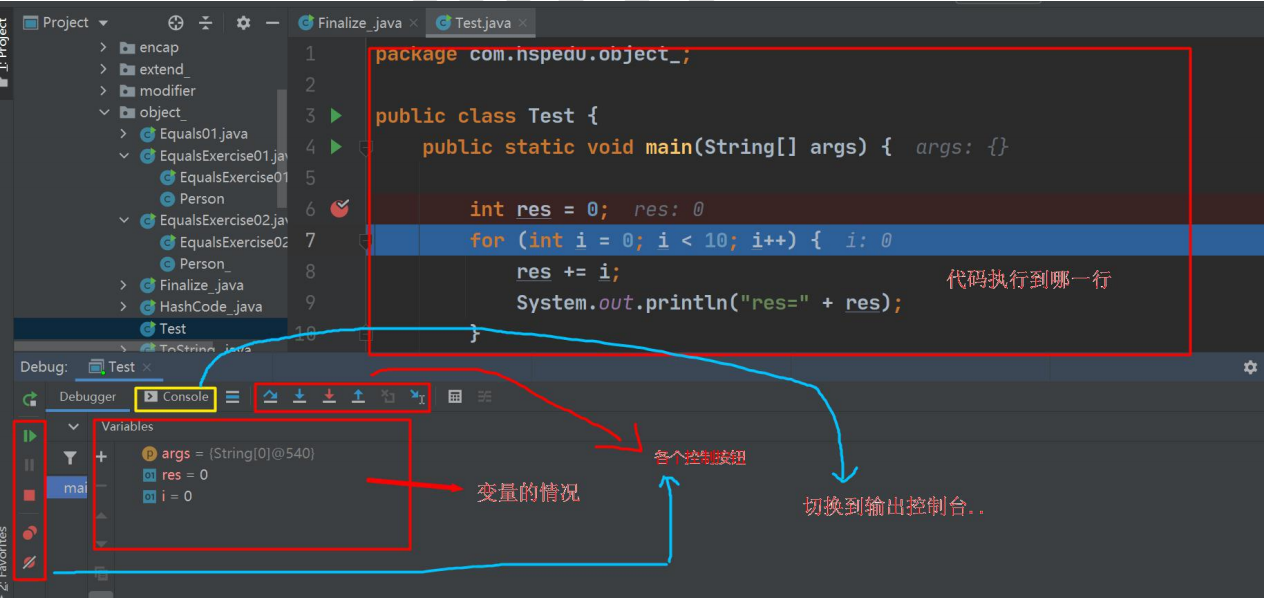
9.2 快捷键
- F7( 跳入) 跳入方法内
- F8 (跳过) 逐行执行代码.
- shift+F8 (跳出) 跳出方法
- F9 (resume,执行到下一个断点)
9.3 应用案例
1
2
3
4
5
6
7
8
9
10
11
12
13
14
15
| package com.hspedu.debug_;
public class Debug01 {
public static void main(String[] args) {
int sum = 0;
for (int i = 0; i < 5; i++) {
sum += i;
System.out.println("i=" + i);
System.out.println("sum=" + i);
}
System.out.println("退出for....");
}
}
|
1
2
3
4
5
6
7
8
9
10
11
12
| package com.hspedu.debug_;
public class Debug02 {
public static void main(String[] args) {
int[] arr = {1, 10, -1};
for (int i = 0; i <= arr.length; i++) {
System.out.println(arr[i]);
}
System.out.println("退出for");
}
}
|
1
2
3
4
5
6
7
8
9
10
11
12
13
14
15
| package com.hspedu.debug_;
import java.util.Arrays;
public class Debug03 {
public static void main(String[] args) {
int[] arr = {1, -1, 10, -20 , 100};
Arrays.sort(arr);
for (int i = 0; i < arr.length; i++) {
System.out.print(arr[i] + "\t");
}
}
}
|
1
2
3
4
5
6
7
8
9
10
11
12
13
14
15
16
17
18
19
20
21
22
23
24
25
| package com.hspedu.debug_;
import java.util.Arrays;
public class Debug04 {
public static void main(String[] args) {
int[] arr = {1, -1, 10, -20 , 100};
Arrays.sort(arr);
for (int i = 0; i < arr.length; i++) {
System.out.print(arr[i] + "\t");
}
System.out.println("hello100");
System.out.println("hello200");
System.out.println("hello300");
System.out.println("hello400");
System.out.println("hello500");
System.out.println("hello600");
System.out.println("hello700");
}
}
|
1
2
3
4
5
6
7
8
9
10
11
12
13
14
15
16
17
18
19
20
21
22
23
24
25
26
27
28
29
30
31
| package com.hspedu.debug_;
public class DebugExercise {
public static void main(String[] args) {
Person jack = new Person("jack", 20);
System.out.println(jack);
}
}
class Person {
private String name;
private int age;
public Person(String name, int age) {
this.name = name;
this.age = age;
}
@Override
public String toString() {
return "Person{" +
"name='" + name + '\'' +
", age=" + age +
'}';
}
}
|
十、练习

1
2
3
4
5
6
7
8
9
10
11
12
13
14
15
16
17
18
19
20
21
22
23
24
25
26
27
28
29
30
31
32
33
34
35
36
37
38
39
40
41
42
43
44
45
46
47
48
49
50
51
52
53
54
55
56
57
58
59
60
61
62
63
64
65
66
67
68
69
70
71
72
73
74
75
76
77
78
79
80
81
82
83
84
85
86
87
88
89
90
91
92
93
| package com.hspedu.homework;
public class Homework01 {
public static void main(String[] args) {
Person[] persons = new Person[3];
persons[0] = new Person("mary",30, "PHP工程师");
persons[1] = new Person("tom",50, "大数据工程师");
persons[2] = new Person("smith",10, "JavaEE工程师");
for (int i = 0; i < persons.length; i++) {
System.out.println(persons[i]);
}
Person tmp = null;
for(int i = 0; i < persons.length -1 ;i++) {
for(int j = 0; j < persons.length -1 - i; j++) {
if(persons[j].getAge() > persons[j+1].getAge()) {
tmp = persons[j];
persons[j] = persons[j+1];
persons[j+1]= tmp;
}
}
}
System.out.println("排序后的效果");
for (int i = 0; i < persons.length; i++) {
System.out.println(persons[i]);
}
}
}
class Person {
private String name;
private int age;
private String job;
public Person(String name, int age, String job) {
this.name = name;
this.age = age;
this.job = job;
}
public String getName() {
return name;
}
public void setName(String name) {
this.name = name;
}
public int getAge() {
return age;
}
public void setAge(int age) {
this.age = age;
}
public String getJob() {
return job;
}
public void setJob(String job) {
this.job = job;
}
@Override
public String toString() {
return "Person{" +
"name='" + name + '\'' +
", age=" + age +
", job='" + job + '\'' +
'}';
}
}
|
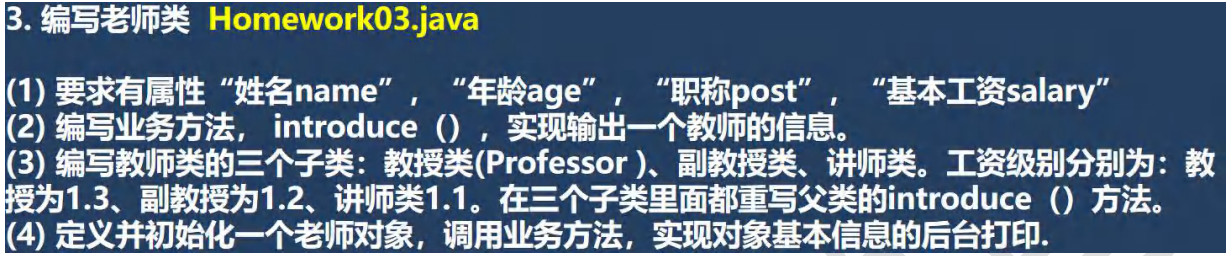
1
2
3
4
5
6
7
8
9
10
11
12
13
14
15
16
17
18
19
20
21
22
23
24
25
26
27
28
29
30
31
32
33
34
35
36
37
38
39
40
41
42
43
44
45
46
47
48
49
50
51
52
53
54
55
56
57
58
59
60
61
62
63
64
65
66
67
68
69
| package com.hspedu.homework;
public class Teacher {
private String name;
private int age;
private String post;
private double salary;
private double grade;
public Teacher(String name, int age, String post, double salary, double grade) {
this.name = name;
this.age = age;
this.post = post;
this.salary = salary;
this.grade = grade;
}
public String getName() {
return name;
}
public void setName(String name) {
this.name = name;
}
public int getAge() {
return age;
}
public void setAge(int age) {
this.age = age;
}
public String getPost() {
return post;
}
public void setPost(String post) {
this.post = post;
}
public double getSalary() {
return salary;
}
public void setSalary(double salary) {
this.salary = salary;
}
public double getGrade() {
return grade;
}
public void setGrade(double grade) {
this.grade = grade;
}
public void introduce() {
System.out.println("name: " + name + " age: " + age
+ " post: " + post + " salary:" + salary + " grade:" + grade);
}
}
|
1
2
3
4
5
6
7
8
9
10
11
12
13
14
15
16
17
| package com.hspedu.homework;
public class Professor extends Teacher {
public Professor(String name, int age, String post, double salary, double grade) {
super(name, age, post, salary, grade);
}
@Override
public void introduce() {
System.out.println(" 这是教授的信息 ");
super.introduce();
}
}
|
1
2
3
4
5
6
7
8
| package com.hspedu.homework;
public class Homework03 {
public static void main(String[] args) {
Professor professor = new Professor("贾宝玉", 30, "高级职称", 30000, 1.3);
professor.introduce();
}
}
|
1
2
3
4
5
6
7
8
9
10
11
12
13
14
15
16
17
18
19
20
21
22
23
24
25
26
27
28
29
30
31
32
33
34
35
36
37
38
39
40
41
42
43
44
45
46
47
48
49
50
51
52
53
54
55
56
57
58
59
60
61
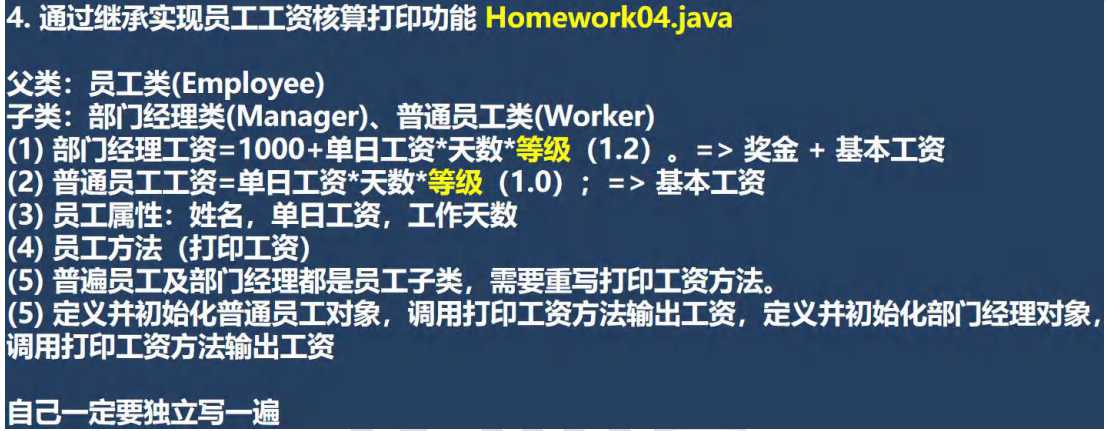
| package com.hspedu.homework;
import java.sql.SQLOutput;
public class Employee {
private String name;
private double daySal;
private int workDays;
private double grade;
public void printSal() {
System.out.println(name + " 工资=" + daySal * workDays * grade);
}
public Employee(String name, double daySal, int workDays, double grade) {
this.name = name;
this.daySal = daySal;
this.workDays = workDays;
this.grade = grade;
}
public String getName() {
return name;
}
public void setName(String name) {
this.name = name;
}
public double getDaySal() {
return daySal;
}
public void setDaySal(double daySal) {
this.daySal = daySal;
}
public int getWorkDays() {
return workDays;
}
public void setWorkDays(int workDays) {
this.workDays = workDays;
}
public double getGrade() {
return grade;
}
public void setGrade(double grade) {
this.grade = grade;
}
}
|
1
2
3
4
5
6
7
8
9
10
11
12
13
14
15
16
17
18
| package com.hspedu.homework;
public class Worker extends Employee{
public Worker(String name, double daySal, int workDays, double grade) {
super(name, daySal, workDays, grade);
}
@Override
public void printSal() {
System.out.print("普通员工 ");
super.printSal();
}
}
|
1
2
3
4
5
6
7
8
9
10
11
12
13
14
15
16
17
18
19
20
21
22
23
24
25
26
27
28
29
30
| package com.hspedu.homework;
public class Manager extends Employee {
private double bonus;
public Manager(String name, double daySal, int workDays, double grade) {
super(name, daySal, workDays, grade);
}
@Override
public void printSal() {
System.out.println("经理 " + getName() + " 工资是="
+ (bonus + getDaySal() * getWorkDays() * getGrade()));
}
public double getBonus() {
return bonus;
}
public void setBonus(double bonus) {
this.bonus = bonus;
}
}
|
1
2
3
4
5
6
7
8
9
10
11
12
13
14
15
16
| package com.hspedu.homework;
public class Homework04 {
public static void main(String[] args) {
Manager manage = new Manager("刘备", 100, 20, 1.2);
manage.setBonus(3000);
manage.printSal();
Worker worker = new Worker("关羽",50, 10, 1.0);
worker.printSal();
}
}
|
1
2
3
4
5
6
7
8
9
10
11
12
13
14
15
16
17
18
19
20
21
22
23
24
25
26
27
28
29
30
31
32
33
34
35
36
37
38
39
40
41
42
43
44
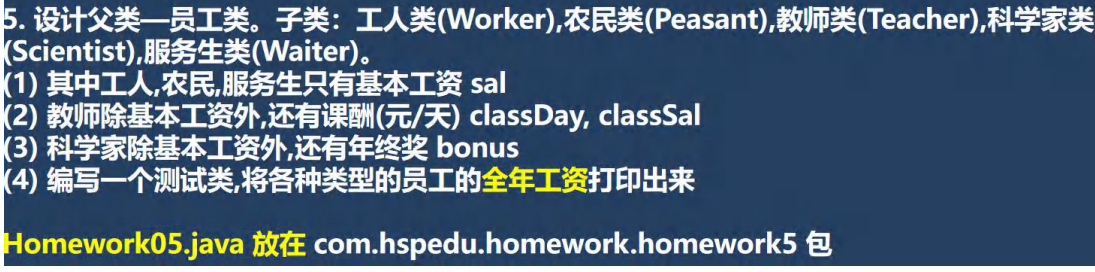
| package com.hspedu.homework.homework5;
public class Employee {
private String name;
private double sal;
private int salMonth = 12;
public void printSal() {
System.out.println(name + " 年工资是: " + (sal * salMonth));
}
public Employee(String name, double sal) {
this.name = name;
this.sal = sal;
}
public String getName() {
return name;
}
public void setName(String name) {
this.name = name;
}
public double getSal() {
return sal;
}
public void setSal(double sal) {
this.sal = sal;
}
public int getSalMonth() {
return salMonth;
}
public void setSalMonth(int salMonth) {
this.salMonth = salMonth;
}
}
|
1
2
3
4
5
6
7
8
9
10
11
12
13
14
15
16
17
18
19
| package com.hspedu.homework.homework5;
public class Peasant extends Employee {
public Peasant(String name, double sal) {
super(name, sal);
}
@Override
public void printSal() {
System.out.print("农民 ");
super.printSal();
}
}
|
1
2
3
4
5
6
7
8
9
10
11
12
13
14
15
16
17
18
19
20
21
22
23
24
25
26
27
28
29
| package com.hspedu.homework.homework5;
public class Scientist extends Employee{
private double bonus;
public Scientist(String name, double sal) {
super(name, sal);
}
@Override
public void printSal() {
System.out.print("科学家 ");
System.out.println(getName() + " 年工资是: " + (getSal() * getSalMonth() + bonus));
}
public double getBonus() {
return bonus;
}
public void setBonus(double bonus) {
this.bonus = bonus;
}
}
|
1
2
3
4
5
6
7
8
9
10
11
12
13
14
15
16
17
18
19
20
21
22
23
24
25
26
27
28
29
30
31
32
33
34
35
36
| package com.hspedu.homework.homework5;
public class Teacher extends Employee{
private int classDays;
private double classSal;
public Teacher(String name, double sal) {
super(name, sal);
}
@Override
public void printSal() {
System.out.print("老师 ");
System.out.println(getName() + " 年工资是: "
+ (getSal() * getSalMonth() + classDays * classSal ));
}
public int getClassDays() {
return classDays;
}
public void setClassDays(int classDays) {
this.classDays = classDays;
}
public double getClassSal() {
return classSal;
}
public void setClassSal(double classSal) {
this.classSal = classSal;
}
}
|
1
2
3
4
5
6
7
8
9
10
11
12
13
14
15
16
17
| package com.hspedu.homework.homework5;
public class Worker extends Employee{
public Worker(String name, double sal) {
super(name, sal);
}
@Override
public void printSal() {
System.out.print("工人 ");
super.printSal();
}
}
|
1
2
3
4
5
6
7
8
9
10
11
12
13
14
15
16
17
18
19
20
21
22
23
24
25
| package com.hspedu.homework.homework5;
public class Homework05 {
public static void main(String[] args) {
Worker jack = new Worker("jack", 10000);
jack.setSalMonth(15);
jack.printSal();
Peasant smith = new Peasant("smith", 20000);
smith.printSal();
Teacher teacher = new Teacher("顺平", 2000);
teacher.setClassDays(360);
teacher.setClassSal(1000);
teacher.printSal();
Scientist scientist = new Scientist("钟南山", 20000);
scientist.setBonus(2000000);
scientist.printSal();
}
}
|
1
2
3
4
5
6
7
8
9
10
11
12
13
14
15
16
17
18
19
20
21
22
23
24
25
26
27
28
29
30
31
32
33
34
35
36
37
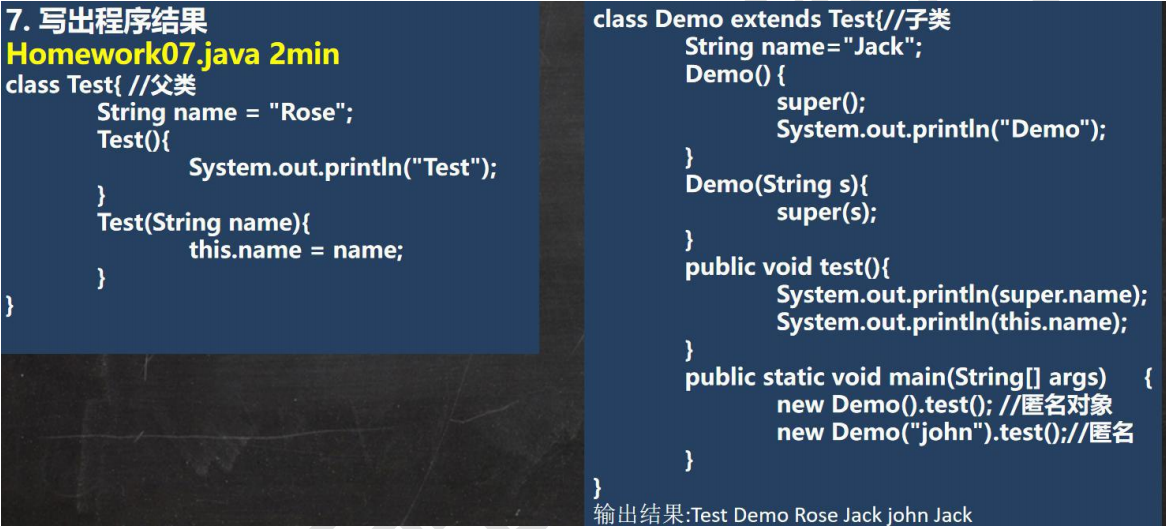
| package com.hspedu.homework;
public class Homework07 {
public static void main(String[] args) {
}
}
class Test{
String name = "Rose";
Test(){
System.out.println("Test");
}
Test(String name){
this.name = name;
}
}
class Demo extends Test{
String name="Jack";
Demo() {
super();
System.out.println("Demo");
}
Demo(String s){
super(s);
}
public void test(){
System.out.println(super.name);
System.out.println(this.name);
}
public static void main(String[] args) {
new Demo().test();
new Demo("john").test();
}
}
|
1
2
3
4
5
6
7
8
9
10
11
12
13
14
15
16
17
18
19
20
21
22
23
24
25
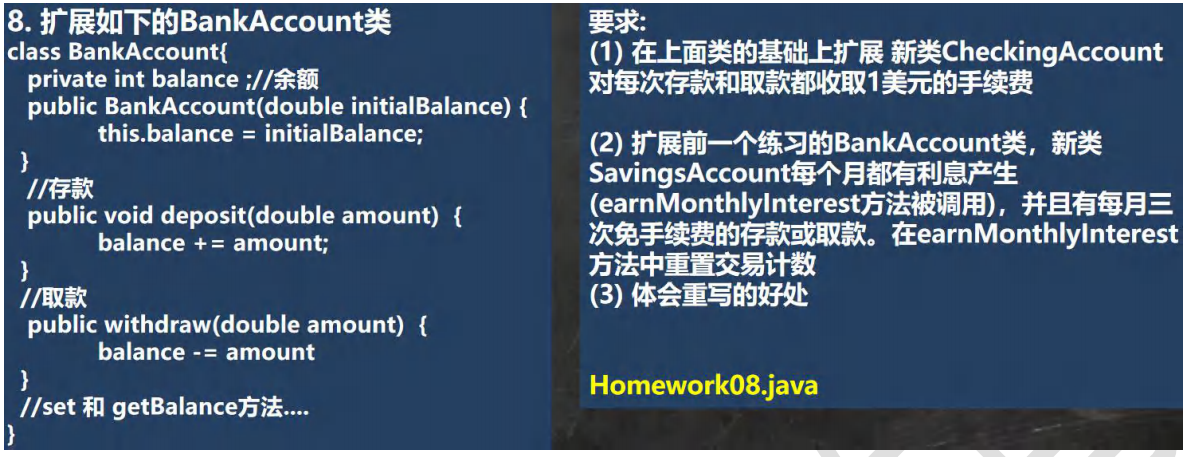
| package com.hspedu.homework;
public class BankAccount {
private double balance ;
public BankAccount(double initialBalance) {
this.balance = initialBalance;
}
public void deposit(double amount) {
balance += amount;
}
public void withdraw(double amount) {
balance -= amount;
}
public double getBalance() {
return balance;
}
public void setBalance(double balance) {
this.balance = balance;
}
}
|
1
2
3
4
5
6
7
8
9
10
11
12
13
14
15
16
17
18
19
20
21
22
23
24
25
| package com.hspedu.homework;
public class CheckingAccount extends BankAccount{
public CheckingAccount(double initialBalance) {
super(initialBalance);
}
@Override
public void deposit(double amount) {
super.deposit(amount - 1);
}
@Override
public void withdraw(double amount) {
super.withdraw(amount + 1);
}
}
|
1
2
3
4
5
6
7
8
9
10
11
12
13
14
15
16
17
18
19
20
21
22
23
24
25
26
27
28
29
30
31
32
33
34
35
36
37
38
39
40
41
42
43
44
45
46
47
48
49
50
51
52
53
54
55
56
57
58
59
60
61
62
63
| package com.hspedu.homework;
public class SavingsAccount extends BankAccount {
private int count = 3;
private double rate = 0.01;
public void earnMonthlyInterest() {
count = 3;
super.deposit(getBalance() * rate);
}
@Override
public void deposit(double amount) {
if(count > 0) {
super.deposit(amount);
} else {
super.deposit(amount - 1);
}
count--;
}
@Override
public void withdraw(double amount) {
if(count > 0) {
super.withdraw(amount);
} else {
super.withdraw(amount + 1);
}
count--;
}
public SavingsAccount(double initialBalance) {
super(initialBalance);
}
public int getCount() {
return count;
}
public void setCount(int count) {
this.count = count;
}
public double getRate() {
return rate;
}
public void setRate(double rate) {
this.rate = rate;
}
}
|
1
2
3
4
5
6
7
8
9
10
11
12
13
14
15
16
17
18
19
20
21
22
23
24
25
26
27
28
29
30
31
32
33
| package com.hspedu.homework;
public class Homework08 {
public static void main(String[] args) {
SavingsAccount savingsAccount = new SavingsAccount(1000);
savingsAccount.deposit(100);
savingsAccount.deposit(100);
savingsAccount.deposit(100);
System.out.println(savingsAccount.getBalance());
savingsAccount.deposit(100);
System.out.println(savingsAccount.getBalance());
savingsAccount.earnMonthlyInterest();
System.out.println(savingsAccount.getBalance());
savingsAccount.withdraw(100);
System.out.println(savingsAccount.getBalance());
savingsAccount.withdraw(100);
savingsAccount.withdraw(100);
System.out.println(savingsAccount.getBalance());
savingsAccount.deposit(100);
System.out.println(savingsAccount.getBalance());
}
}
|

1
2
3
4
5
6
7
8
9
10
11
12
| package com.hspedu.homework;
public class Point {
private double x;
private double y;
public Point(double x, double y) {
this.x = x;
this.y = y;
}
}
|
1
2
3
4
5
6
7
8
9
10
11
12
13
| package com.hspedu.homework;
public class LabeledPoint extends Point {
private String label;
public LabeledPoint(String label, double x, double y) {
super(x, y);
this.label = label;
}
}
|
1
2
3
4
5
6
7
8
| package com.hspedu.homework;
public class Homework09 {
public static void main(String[] args) {
new LabeledPoint("Black",1929,230.07);
}
}
|

1
2
3
4
5
6
7
8
9
10
11
12
13
14
15
16
17
18
19
20
21
22
23
24
25
26
27
28
29
30
31
32
33
34
35
36
37
38
39
40
41
42
43
44
45
46
47
48
49
50
51
52
53
54
55
56
57
58
59
60
61
62
63
64
65
66
67
68
69
70
71
72
73
74
75
76
77
78
79
80
81
82
83
| package com.hspedu.homework;
public class Doctor {
private String name;
private int age;
private String job;
private char gender;
private double sal;
public Doctor(String name, int age, String job, char gender, double sal) {
this.name = name;
this.age = age;
this.job = job;
this.gender = gender;
this.sal = sal;
}
public String getName() {
return name;
}
public void setName(String name) {
this.name = name;
}
public int getAge() {
return age;
}
public void setAge(int age) {
this.age = age;
}
public String getJob() {
return job;
}
public void setJob(String job) {
this.job = job;
}
public char getGender() {
return gender;
}
public void setGender(char gender) {
this.gender = gender;
}
public double getSal() {
return sal;
}
public void setSal(double sal) {
this.sal = sal;
}
public boolean equals(Object obj) {
if (this == obj) {
return true;
}
if (!(obj instanceof Doctor)) {
return false;
}
Doctor doctor = (Doctor)obj;
return this.name.equals(doctor.name) && this.age == doctor.age &&
this.gender == doctor.gender && this.job.equals(doctor.job) && this.sal == doctor.sal;
}
}
|
1
2
3
4
5
6
7
8
9
10
11
12
| package com.hspedu.homework;
public class Homework10 {
public static void main(String[] args) {
Doctor doctor1 = new Doctor("jack", 20, "牙科医生", '男', 20000);
Doctor doctor2 = new Doctor("jack", 21, "牙科医生", '男', 20000);
System.out.println(doctor1.equals(doctor2));
}
}
|
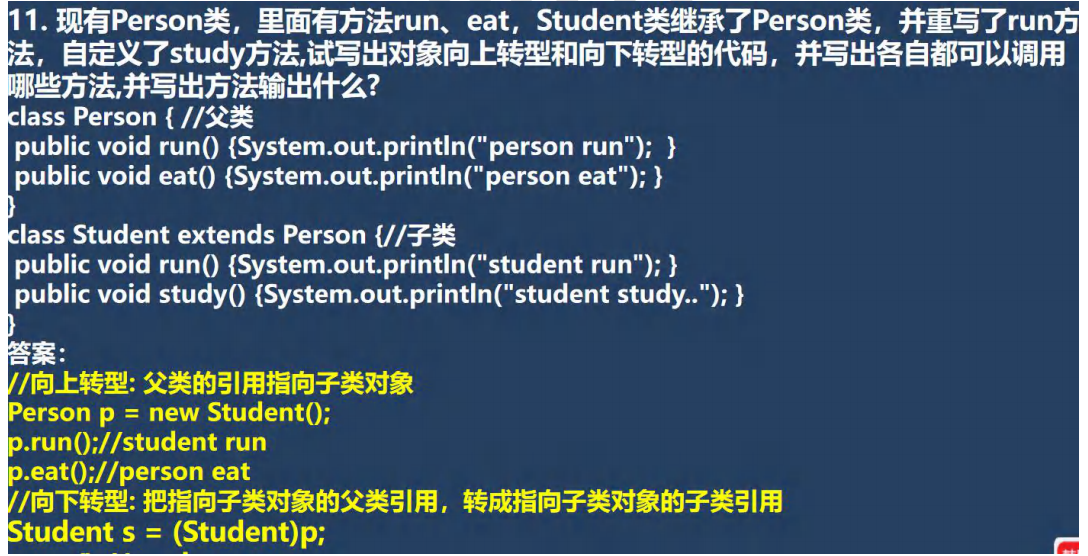
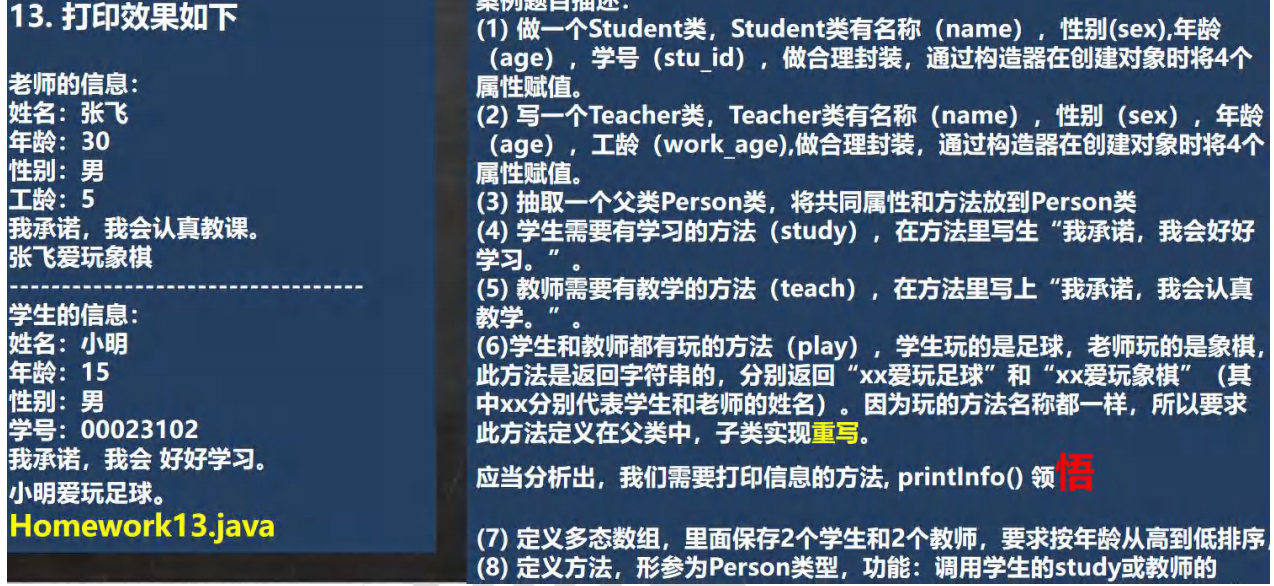
1
2
3
4
5
6
7
8
9
10
11
12
13
14
15
16
17
18
19
20
21
22
23
24
25
26
27
28
29
30
31
32
33
34
35
36
37
38
39
40
41
42
43
44
45
46
47
48
49
50
51
52
53
54
55
56
57
58
59
60
61
62
63
64
| package com.hspedu.homework.homework13;
public class Person {
private String name;
private char gender;
private int age;
public Person(String name, char gender, int age) {
this.name = name;
this.gender = gender;
this.age = age;
}
public String getName() {
return name;
}
public void setName(String name) {
this.name = name;
}
public char getGender() {
return gender;
}
public void setGender(char gender) {
this.gender = gender;
}
public int getAge() {
return age;
}
public void setAge(int age) {
this.age = age;
}
public String play() {
return name + "爱玩";
}
public String basicInfo() {
return "姓名: " + name + "\n年龄: " + age + "\n性别: " + gender;
}
@Override
public String toString() {
return "Person{" +
"name='" + name + '\'' +
", gender=" + gender +
", age=" + age +
'}';
}
}
|
1
2
3
4
5
6
7
8
9
10
11
12
13
14
15
16
17
18
19
20
21
22
23
24
25
26
27
28
29
30
31
32
33
34
35
36
37
38
39
40
41
42
43
44
45
46
47
48
49
50
51
52
53
54
55
56
57
| package com.hspedu.homework.homework13;
public class Student extends Person{
private String stu_id;
public Student(String name, char gender, int age, String stu_id) {
super(name, gender, age);
this.stu_id = stu_id;
}
public String getStu_id() {
return stu_id;
}
public void setStu_id(String stu_id) {
this.stu_id = stu_id;
}
public void study() {
System.out.println(getName() + "承诺,我会好好学习 老韩讲的 java");
}
@Override
public String play() {
return super.play() + "足球";
}
public void printInfo() {
System.out.println("学生的信息:");
System.out.println(super.basicInfo());
System.out.println("学号: " + stu_id);
study();
System.out.println(play());
}
@Override
public String toString() {
return "Student{" +
"stu_id='" + stu_id + '\'' +
'}' + super.toString();
}
}
|
1
2
3
4
5
6
7
8
9
10
11
12
13
14
15
16
17
18
19
20
21
22
23
24
25
26
27
28
29
30
31
32
33
34
35
36
37
38
39
40
41
42
43
44
45
46
47
48
49
50
51
52
53
| package com.hspedu.homework.homework13;
public class Teacher extends Person {
private int work_age;
public Teacher(String name, char gender, int age, int work_age) {
super(name, gender, age);
this.work_age = work_age;
}
public int getWork_age() {
return work_age;
}
public void setWork_age(int work_age) {
this.work_age = work_age;
}
public void teach() {
System.out.println(getName() + "承诺,我会认真教学 java...");
}
@Override
public String play() {
return super.play() + "象棋";
}
public void printInfo() {
System.out.println("老师的信息:");
System.out.println(super.basicInfo());
System.out.println("工龄: " + work_age);
teach();
System.out.println(play());
}
@Override
public String toString() {
return "Teacher{" +
"work_age=" + work_age +
'}' + super.toString();
}
}
|
1
2
3
4
5
6
7
8
9
10
11
12
13
14
15
16
17
18
19
20
21
22
23
24
25
26
27
28
29
30
31
32
33
34
35
36
37
38
39
40
41
42
43
44
45
46
47
48
49
50
51
52
53
54
55
56
57
58
59
60
61
62
63
64
65
66
67
68
69
70
| package com.hspedu.homework.homework13;
public class Homework13 {
public static void main(String[] args) {
Teacher teacher = new Teacher("张飞", '男', 30, 5);
teacher.printInfo();
Student student = new Student("小明", '男', 15, "00023102");
System.out.println("-----------------------------------");
student.printInfo();
Person[] persons = new Person[4];
persons[0] = new Student("jack", '男', 10, "0001");
persons[1] = new Student("mary", '女', 20, "0002");
persons[2] = new Teacher("smith", '男', 36, 5);
persons[3] = new Teacher("scott", '男', 26, 1);
Homework13 homework13 = new Homework13();
homework13.bubbleSort(persons);
System.out.println("---排序后的数组-----");
for(int i = 0; i < persons.length; i++) {
System.out.println(persons[i]);
}
System.out.println("=======================");
for (int i = 0; i < persons.length; i++) {
homework13.test(persons[i]);
}
}
public void test(Person p) {
if(p instanceof Student) {
((Student) p).study();
} else if(p instanceof Teacher) {
((Teacher) p).teach();
} else {
System.out.println("do nothing...");
}
}
public void bubbleSort(Person[] persons) {
Person temp = null;
for (int i = 0; i < persons.length - 1; i++) {
for (int j = 0; j < persons.length - 1 - i; j++) {
if(persons[j].getAge() < persons[j+1].getAge()) {
temp = persons[j];
persons[j] = persons[j + 1];
persons[j + 1] = temp;
}
}
}
}
}
|
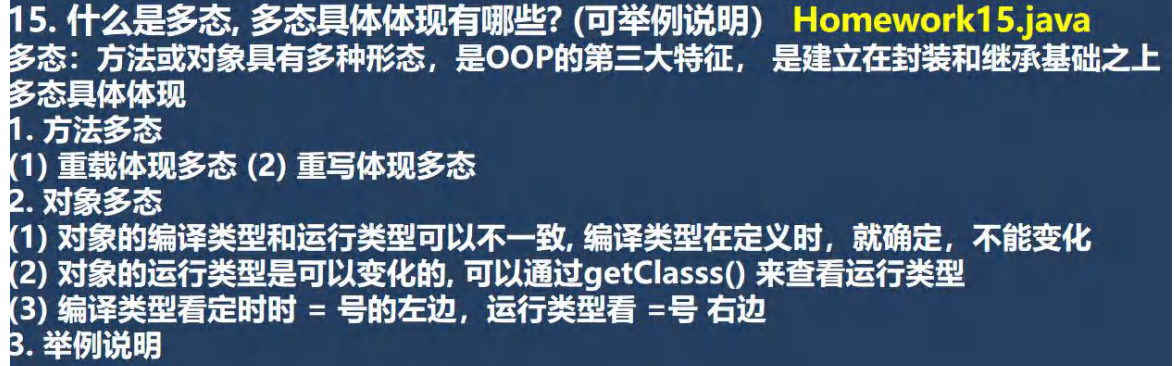
1
2
3
4
5
6
7
8
9
10
11
12
13
14
15
16
17
18
19
20
21
22
23
24
25
| package com.hspedu.homework;
public class Homework15 {
public static void main(String[] args) {
AAA obj = new BBB();
AAA b1 = obj;
System.out.println("obj的运行类型=" + obj.getClass());
obj = new CCC();
System.out.println("obj的运行类型=" + obj.getClass());
obj = b1;
System.out.println("obj的运行类型=" + obj.getClass());
}
}
class AAA {
}
class BBB extends AAA {
}
class CCC extends BBB {
}
|

 wechat
 alipay